
- Individual • Group • Virtual Available • Hopewell Junction, NY
Executive Functioning &
Organizational Coaching
Personalized coaching that targets the higher-order cognitive skills behind academic achievement, social success, and daily functioning for students who are working hard but not getting the results their effort deserves.
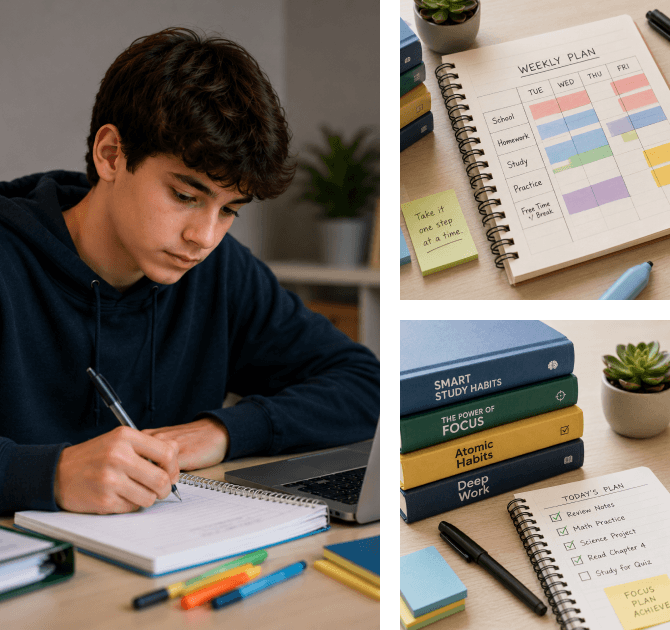
- What Is Executive Functioning?
The Higher-Order Skills
Behind Everything Your
Student Does
Executive Functioning is a term that encompasses various higher-order cognitive processes that govern goal-directed behavior and enable us to manage everyday activities. These are the mental skills that help us get things done.
Executive functioning is not a cognitive disability. In fact, people who have not been diagnosed with a cognitive disability may still experience significant academic, social, life skill, and career challenges if they have deficits in their executive functions. These challenges are real and they are addressable with the right support.
Strong executive functioning underpins academic performance, social relationships, daily independence, and long-term career success. When these skills are underdeveloped, coaching not just more effort is what makes the difference.
Signs Your Student May Need EF Coaching
Homework consistently left incomplete or submitted late despite genuine effort
Binder, backpack, and computer files chronically disorganized
Cannot break long-term projects into steps frozen by where to start
Grades do not reflect actual ability the gap between effort and output is growing
Acts impulsively, struggles to resist distractions, or has difficulty identifying consequences
Grades do not reflect actual ability the gap between effort and output is growing
- Three Core EF Skill Areas
What Executive Functioning Actually Means in Practice
Executive functioning encompasses three foundational skill clusters. Our coaching directly addresses all three through strategies, systems, and practice that transfer into academic and daily life.

- EF Skill 1
Inhibitory Control
The ability to distinguish between relevant and irrelevant information and resist temptations.
- Controlling impulses to stop inappropriate behavior
- Resisting distractions to complete a task
- Resisting peer pressure and identifying consequences to actions

- EF Skill 2
Cognitive Flexibility
The ability to persist in a task without shifting and find multiple ways to solve problems.
- Problem-solving through taking a different perspective
- Finding various ways to approach a challenge
- Creatively identifying alternate solutions
- Quickly adapting to changing demands or priorities
- Acknowledging when new information changes the picture

- EF Skill 3
Working Memory
The ability to keep and manipulate multiple sources of information at the same time.
- Creatively playing with ideas and making connections
- Solving mental math problems
- Remembering and completing multi-step instructions
- Holding a task in mind while doing something else
- What Coaching Addresses
Topics Covered in Executive Functioning Coaching
Sessions are fully tailored to the individual needs of each student. While no two coaching relationships look identical.
the following are among the most common areas addressed:
- Setting up and implementing a homework plan for daily and long-term assignments
- Breaking long-term assignments into manageable parts with deadlines
- General time management skills and overcoming procrastination
- Organization of physical materials binders, folders, backpack
- Organization of computer files and online assignments
- Learning how to study effectively based on individual strengths and learning style
- Using specific apps and tools to manage time and stay organized
- Improving follow-through on chores and responsibilities at home
- Addressing self-esteem, anxiety, or other issues impacting functioning
What Is Included in Every 45-Minute Session
1:1 coaching support focused on executive functioning behavior or academic support
Follow-up via written email and/or video notes for the client and caregivers after every session
Individualized resources for practice yours to keep digitally
Email access to your coach at any time for follow-up support between sessions
What a Coaching Session Looks Like
While every session is individualized, here is an example of what a typical executive functioning coaching session may include:

Review the planner or online learning portal and discuss current and upcoming assignments


Plan out tasks for the next week and develop a structured, actionable plan together


Discuss obstacles, anxiety, or other specific challenges coming up

Practice using specific tools to improve attention, study skills, and organization

Write up strategies collaboratively and store them electronically or in paper form for easy reference
- Parent stories
Real Families. Real Results.
You’re not the first family to walk in feeling hopeless. And you won’t be the last to walk out feeling seen.
We spent years trying different programs, but this was the first place where our son truly felt understood. The changes in his confidence, focus, and communication have been incredible for our whole family.
Emma & Daniel
Parents of Liam, age 7
Our daughter used to dread reading and schoolwork. Now she proudly reads bedtime stories to her little brother. The patience, warmth, and support here made all the difference.
Sophia & Michael
Parents of Ava, age 9
We spent years trying different programs, but this was the first place where our son truly felt understood. The changes in his confidence, focus, and communication have been incredible for our whole family.
Emma & Daniel
Parents of Liam, age 7
- Questions parents ask us
Honest answers to the things you're actually wondering.
Still have questions? We’d rather you ask than wonder.
- Take the first step
You don't need to have it figured out. You just need to start.
A free 30-minute conversation, no clipboards or scripts. Just us, you, and whatever you’re carrying.