- Animal Therapy • Clinician-Led • Hopewell Junction, NY
Animal Assisted Therapy & Interventions The Healing Power of the Human-Animal Bond
Goal-directed, clinician-led therapy using trained therapy dogs to improve emotional, social, cognitive, and physical functioning and wellness classes open to all abilities for anyone who loves animals.
- What Is It?
More Than a Dog Visit A Structured, Goal-Directed Clinical Intervention
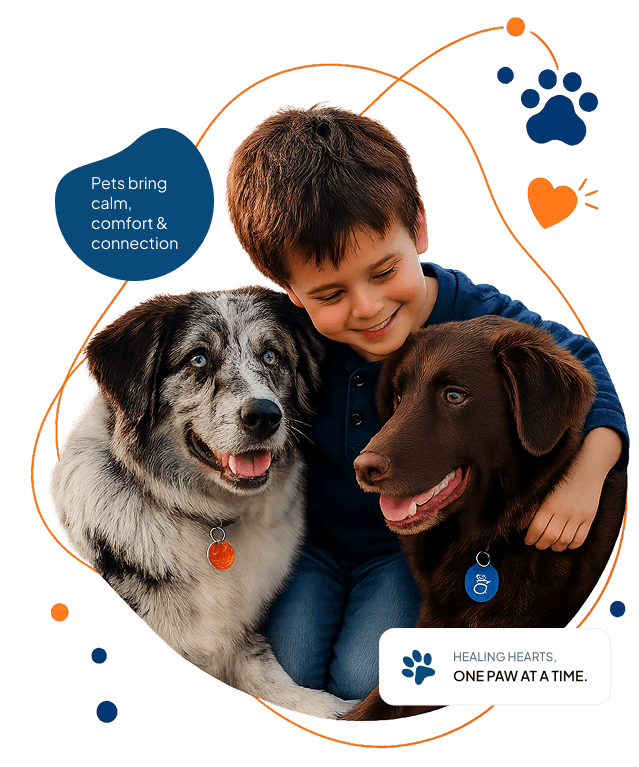
Animal Assisted Intervention (AAI) is a broad term describing the intentional, structured use of animals in clinical, educational, and recreational settings to benefit human health and wellbeing. At Sensory Stepping Stones, AAI encompasses three distinct service types each designed for a different purpose and population.
Animal Assisted Therapy (AAT) is the most clinically intensive form a planned, documented, goal-directed intervention directed by a licensed mental health professional. It is fundamentally different from a casual animal visit or volunteer program. Every AAT session has defined therapeutic goals, measurable outcomes, and a clinical framework that guides each interaction between the client and the therapy animal.
The science behind why this works is compelling. Interacting with animals triggers measurable physiological responses reduced cortisol, increased oxytocin, lower heart rate that create a biological state of openness and calm. In this state, children who resist traditional talk therapy, struggle with emotional regulation, or find direct social interaction overwhelming are often able to engage more authentically and progress more rapidly toward their therapeutic goals.
3
Types of animal assisted services therapy, education, and wellness
6+
Years old minimum age for individual wellness sessions
6
Week group wellness class sessions available
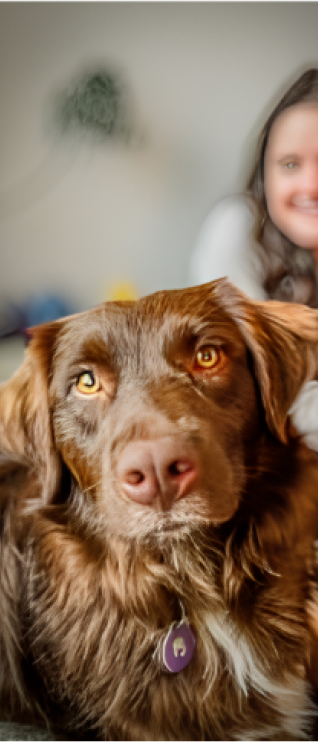
The dogs lead, too. Our therapy dogs Talia and Kalina , are active participants in sessions, not passive props. Their welfare is always the priority. Clients learn to read the dogs’ cues, respond to their needs, and respect their boundaries building empathy, patience, and attunement skills that transfer directly to human relationships.
Animal Assisted Intervention vs. A Pet Visit
- AAT has defined therapeutic goals tailored to each client
- Sessions are planned, structured, and documented clinically
- Led by a licensed mental health provider not a volunteer
- Progress is measured and reported across sessions
- Integrated with the client's broader treatment plan
- The animal is specifically trained for therapeutic intervention
- Outcomes extend beyond the session into daily life skills
- Is This the Right Fit?
Three Types of Animal Assisted Intervention
at Sensory Stepping Stones
We offer animal assisted services across three distinct formats ranging from clinical therapy to inclusive wellness classes so that the human-animal bond is accessible to individuals at every level of need and ability.

- AAT — Therapy
Animal Assisted Therapy
A structured, goal-directed clinical intervention directed by Melissa Bianchini, LCSW. Sessions are planned, documented, and tailored to each client's therapeutic goals promoting physical, social, emotional, and cognitive functioning. Appropriate for clients who have been evaluated and screened for AAT participation. The dogs participate at their own discretion and comfort.

- AAE — Education
Animal Assisted Education
Structured educational activities incorporating animals to support learning goals. AAE leverages the animal's presence to improve engagement, reduce anxiety around learning, and create memorable, motivating educational experiences for children who struggle in traditional academic settings. Particularly effective for building reading confidence, vocabulary, and communication skills.
- AAA — Wellness
Animal Assisted Wellness Activities
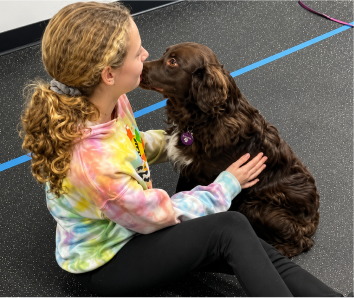
Fun, structured group and individual sessions engaging with trained therapy dogs through enrichment activities, basic training exercises, and interactive play. Open to all abilities with or without a disability. No therapeutic goals required. These classes are ideal for animal lovers, aspiring pet owners, or anyone who wants to experience the benefits of positive human-animal interaction in a supported, welcoming environment.
- Inside the Program
The Science Behind the Human-Animal Bond in Therapy
Looking for individual therapeutic approaches for your child or teen? We offer a variety of programs and would love to discuss the options that would best suit your child or teen today.
Oxytocin Release
Positive physical interaction with animals triggers oxytocin the bonding hormone creating a biological state of trust and openness that lowers therapeutic resistance and accelerates connection.
Reduced Cortisol
Animal interaction measurably lowers cortisol the stress hormone reducing physiological anxiety & creating the calm neurological conditions needed for learning, connection, emotional processing.
Lowered Heart Rate
Even brief interaction with a calm, trained animal produces measurable reductions in heart rate and blood pressure signaling to the nervous system that it is safe to relax and engage.
Reduced Social Anxiety
Children who find direct human interaction overwhelming often engage more comfortably when an animal is present the animal serves as a bridge, reducing the social pressure that typically triggers withdrawal or shutdown.
Increased Motivation
The presence of an animal dramatically increases motivation to engage in therapeutic tasks. Children who resist traditional interventions often willingly participate in identical activities when the animal is involved.
Empathy Development
Learning to read animal body language, respond to their needs, and respect their limits builds the same empathy, attunement, and perspective-taking skills that are foundational to healthy human relationships.
- Outcomes & Results
What Families Experience Through
Animal Assisted Intervention
Animal assisted therapy produces benefits that extend far beyond the session itself improvements in emotional regulation, social confidence, communication, and self-esteem that carry over into home, school, and community settings.
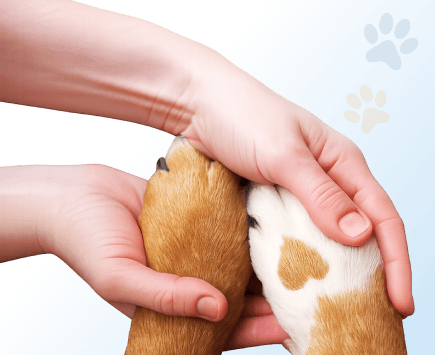
Greater Emotional Openness in Sessions
Children who are guarded or resistant in traditional therapy often open up more readily when a therapy dog is present lowering defenses and accelerating the therapeutic relationship.
Improved Emotional Regulation
Caring for and interacting with a calm, responsive animal teaches children to manage their own emotional state reducing the frequency and intensity of meltdowns and anxiety responses.
Stronger Empathy and Social Awareness
Reading the therapy dog's body language and responding to its needs builds the same attunement and perspective-taking skills that underpin healthy peer relationships and social functioning.
Reduced Anxiety in Clinical Settings
The presence of a therapy dog dramatically reduces the anxiety that many children especially those with sensory sensitivities or social communication challenges experience in clinical environments.
Increased Engagement and Motivation
Children who disengage from traditional therapeutic activities often remain fully engaged when animals are involved increasing session productivity and accelerating progress toward therapeutic goals.
Improved Self-Esteem and Confidence
Successfully communicating with, guiding, and connecting with a therapy animal builds a child's sense of competence and self-worth a foundation that carries into all areas of daily functioning.

- Wellness Classes
Animal Assisted Wellness Training
Classes Open to All
Our wellness classes are designed for children, teens, and adults who love animals whether they have a disability, are thinking about getting a pet, or simply want positive, supported experiences with dogs in a friendly environment. These classes do not provide clinical therapy but offer meaningful human-animal interaction with real developmental and emotional benefits.
Wellness Class Details
Classes are led by Melissa Bianchini, LCSW a certified dog trainer and licensed clinical social worker alongside Talia and Kalina, our specially trained therapy dogs. Each class incorporates educational experiences, interactive activities, and positive human-animal engagement in a safe, welcoming group setting.
Group Sessions
Groups of 3 to 6 participants with varying ages across different session groups. One hour per week across 6-week sessions. Open to participants ages 6 through teens. Custom groups of 3 or more can be arranged on a specific preferred day.
Improved Emotional Regulation
Caring for and interacting with a calm, responsive animal teaches children to manage their own emotional state reducing the frequency and intensity of meltdowns and anxiety responses.
Who These Classes Are For
Animal lovers who cannot currently have a pet at home. People with limited prior experience with dogs who want to build comfort and confidence. Individuals who want a supportive, low-pressure environment to develop animal handling skills.
Inclusive Design
Classes are designed to be inclusive for participants with and without disabilities. All abilities are welcomed and accommodated. The focus is on positive interaction, not performance every participant engages at their own level and pace.
For Individual Wellness Sessions or Individual Therapy:
Please contact Melissa Bianchini directly at mbianchini@sensorysteppingstones.com
or call the clinic at (914) 244-4101.
- Who It Is For
Animal Assisted Intervention Serves a
Wide Range of Individuals
One of the most powerful qualities of animal assisted intervention is its broad accessibility. The human-animal bond does not require verbal fluency, emotional openness, or a specific diagnosis which makes it particularly effective for populations that traditional therapies struggle to reach.
Children & Teens Benefit When…
- Traditional therapy has felt threatening, boring, or unproductive
- Social anxiety makes peer interaction overwhelming
- Emotional dysregulation is impacting home and school functioning
- Low self-esteem is limiting participation in activities
- Empathy and social skill development are areas of need
- A sensory-friendly, low-pressure therapeutic environment is needed
- They love animals and respond positively to animal interaction
Wellness classes are open to all — no diagnosis, no clinical need, no prior experience with animals required.
Conditions Commonly Supported
✅ Autism Spectrum Disorder
✅ Anxiety & Depression
✅ ADHD
✅ Sensory Processing Disorder
✅ Trauma & PTSD
✅ Selective Mutism
✅ Low Self-Esteem
✅ Developmental Delays
✅ Emotional Dysregulation
✅ Grief & Loss
✅ School Avoidance
✅ Social Communication Challenges
- Parent stories
Real Families. Real Results.
You’re not the first family to walk in feeling hopeless. And you won’t be the last to walk out feeling seen.
We spent years trying different programs, but this was the first place where our son truly felt understood. The changes in his confidence, focus, and communication have been incredible for our whole family.
Emma & Daniel
Parents of Liam, age 7
Our daughter used to dread reading and schoolwork. Now she proudly reads bedtime stories to her little brother. The patience, warmth, and support here made all the difference.
Sophia & Michael
Parents of Ava, age 9
We spent years trying different programs, but this was the first place where our son truly felt understood. The changes in his confidence, focus, and communication have been incredible for our whole family.
Emma & Daniel
Parents of Liam, age 7
- Questions parents ask us
Honest answers to the things you're actually wondering.
Neurofeedback monitors the brain's electrical activity in real time and provides immediate feedback — typically a visual or auditory signal — when the brain produces patterns associated with focused, calm attention. The brain is naturally drawn to optimize toward the rewarded pattern through a process similar to operant conditioning. Over repeated sessions, it learns to produce those patterns consistently on its own, without the feedback signal. This is why improvements persist after the program ends — the brain itself has changed, not just the behavior.
Yes. Neurofeedback is entirely non-invasive — no electricity is sent into the brain. Sensors are placed on the scalp to read the brain's existing electrical activity, and the feedback is delivered through audio or visual signals. There are no medications involved, no needles, and no physical discomfort. The program has been used safely with children for decades and is considered a well-established clinical intervention for attention and self-regulation challenges.
No diagnosis is required. The program is effective for children with formal diagnoses like ADHD, autism spectrum disorder, anxiety, and sensory processing disorder — as well as for children who are struggling without a clinical label. Children whose attention and behavior difficulties are related to excessive technology use also respond particularly well to this program, without any formal diagnosis as a prerequisite.
The full program consists of 30 to 40 individual sessions, each lasting 45 to 60 minutes. Sessions are held at least twice per week for optimal results. The clinic is open 7 days a week — including evenings and weekends — to accommodate different family schedules.
Yes — and it frequently is. Neuro/Bio and Educational Feedback is most commonly offered as part of a larger program package that includes Neuro Integration Therapy™, Interactive Metronome®, and Cognitive and Memory Training. Our clinical team coordinates all programs to work together under one roof, ensuring each complements the others without overlap or conflict.
Many families notice early shifts within the first 8 to 12 sessions — particularly calmer behavior at home, improved ability to disengage from screens, and more manageable emotional responses. Academic and social improvements typically build progressively across the full 30 to 40 sessions. Because the brain is genuinely changing — not just learning to comply temporarily — improvements tend to continue consolidating even after the program formally ends.
Still have questions? We’d rather you ask than wonder.
- Clinical Expertise
Certified Animal-Assisted Intervention Specialist
& Licensed Clinician
Animal Assisted Therapy at Sensory Stepping Stones is led exclusively by Melissa Bianchini, LCSW a Licensed Clinical Social Worker in New York State with specialized certifications in both animal-assisted intervention and art therapy. Melissa is also a certified dog trainer, which means she understands the dogs’ behavior, welfare, and training needs as deeply as she understands her clients’ clinical needs.
This dual expertise clinical and canine is what distinguishes AAT at Sensory Stepping Stones from animal visit programs run by volunteers. Every session is clinically intentional, canine-aware, and therapeutically purposeful.
Melissa’s broader clinical background in neuroscience, sensory integration, and trauma-informed care means that animal assisted sessions are always grounded in a comprehensive understanding of each client’s nervous system, history, and therapeutic trajectory.
Credentials & Specializations
- Certified Animal-Assisted Intervention Specialist
- Certified Dog Trainer
- Licensed Clinical Social Worker (LCSW), New York State
- Children & Families Specialty License
- Certified Art Therapy Specialist
- Master Level Interactive Metronome® Clinician
- Certified Sensory Learning℠ Program Provider
- Neurofeedback & PlayAttention® Provider
Serving Dutchess County, Putnam County & the greater Hudson Valley
- Take the first step
You don't need to have it figured out. You just need to start.
A free 30-minute conversation, no clipboards or scripts. Just us, you, and whatever you’re carrying.