- Dyslexia Specialist • Certified OG Practitioner • Hopewell Junction, NY
Orton-Gillingham Based
Multisensory Reading Intervention
A structured, systematic, and individualized reading program for children with dyslexia and language-based reading difficulties delivered by a certified special education teacher and an associate member of the Academy of Orton Gillingham.
- What Is It?
Reading Intervention That Works With
the Way Dyslexic Brains Actually Learn
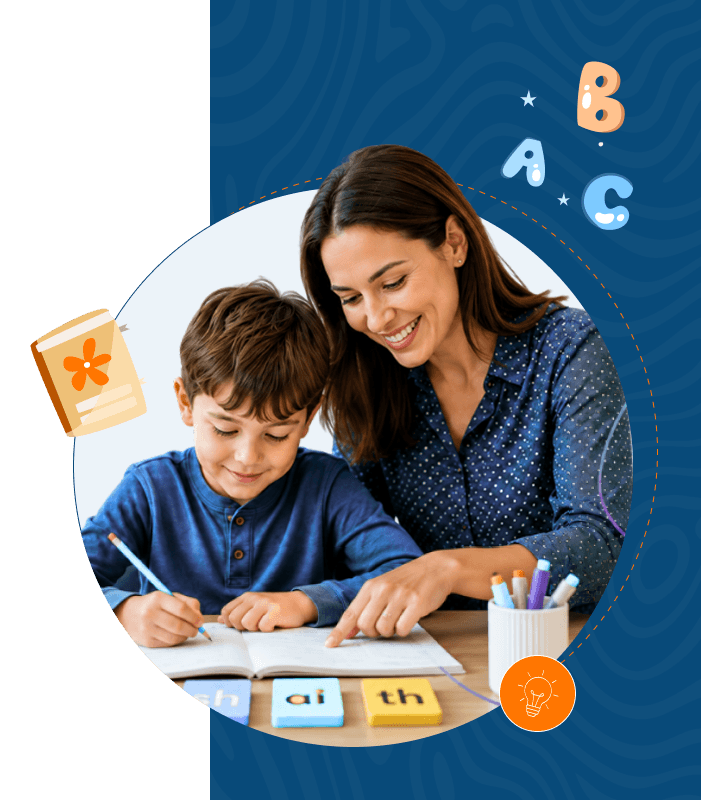
The Orton-Gillingham approach is the most widely researched and replicated method for teaching children with dyslexia and language-based reading disabilities to read. Developed by neurologist Samuel T. Orton and educator Anna Gillingham in the early twentieth century, it has been refined over decades into the gold standard framework for structured literacy instruction.
Unlike general reading instruction, the Orton-Gillingham method is explicit, systematic, cumulative, and multisensory. Every lesson integrates visual, auditory, and kinesthetic-tactile channels simultaneously teaching the brain to decode and encode language through multiple pathways at once, rather than relying solely on visual memory or phonemic awareness in isolation.
Each lesson builds directly on the previous one. The curriculum is individualized meaning the pace, content, and sequencing are determined entirely by where each specific student is and how they are progressing, not by a rigid schedule. This is why Orton-Gillingham works when generic phonics programs and classroom-based reading instruction have not.
1 in 5
children in the U.S. has a reading challenge
1 in 7
children has dyslexia the most common learning disability
70%
of children behind in reading in 1st grade will still be behind in 8th grade without proper intervention
What Makes Orton-Gillingham Different From Standard Tutoring
- Structured and systematic every concept introduced in a defined, logical sequence
- Cumulative each lesson builds on all previous lessons with continuous review
- Individualized pace and content determined by student progress, not a rigid calendar
- Multisensory visual, auditory, and kinesthetic channels used simultaneously
- Explicit nothing assumed; every phoneme-grapheme relationship taught directly
- Diagnostic ongoing assessment guides every instructional decision
- Delivered by a certified specialist with 20+ years of specialized experience
Group participation offers something individual therapy alone cannot the lived experience of practicing skills with peers in real time, in a setting that mirrors the social demands of everyday life.
- Understanding Dyslexia
Dyslexia Is Not About Intelligence It Is About How
the Brain Processes Language
Dyslexia is a specific learning disability that is neurological in origin. It affects the phonological component of language the ability to recognize and manipulate the individual sounds that make up words. It is not caused by low intelligence, poor vision, inadequate teaching, or lack of effort. Many of the most creative and capable people in history have had dyslexia.
15–20%
of the population shows signs of dyslexia making it the most common learning disability
90–95%
of children with reading difficulties can overcome them with early, appropriate specialized instruction
70%
of children struggling to read in 1st grade will still be behind in 8th grade without the right intervention
Dyslexia is characterized by difficulties with accurate and fluent word recognition, poor spelling, and weak decoding skills often unexpected given a child’s other cognitive abilities and the quality of classroom instruction they have received. Secondary effects can include reduced reading experience that widens vocabulary and knowledge gaps over time. Early intervention is the most powerful lever available.
- Recognizing the Signs
Signs Your Child May Have Dyslexia or a
Language -Based Reading Difficulty
Dyslexia does not look the same in every child and it rarely looks the way most people expect. The following patterns are among the most common indicators that a child may benefit from specialized reading assessment and intervention.

Struggles to sound out unfamiliar words reads slowly, haltingly, or by guessing from context rather than decoding.

Reading fluency significantly below grade level despite apparent intelligence and effort the gap between spoken and written ability is conspicuous.

Reading fluency significantly below grade level despite apparent intelligence and effort the gap between spoken and written ability is conspicuous.

Strong verbal ability that contrasts sharply with written output clearly intelligent in conversation but far behind peers in reading and writing tasks.

Persistent, inconsistent spelling errors despite repeated practice often spelling the same word differently within a single sentence, paragraph.

Difficulty rhyming, segmenting syllables, or manipulating sounds struggles with phonological awareness tasks that peers handle automatically

Avoidance of reading and writing activities beyond typical reluctance often shown through frustration, procrastination, school resistance.

Reading comprehension suffers because so much cognitive effort goes into decoding little capacity remains for understanding.
Your child’s school has said they do not qualify for reading services. This happens frequently and it does not mean your child does not need intervention. It means the school’s eligibility criteria were not met. A private evaluation and targeted private instruction can make an enormous difference, regardless of school eligibility status.
- The Method
Six Core Principles of the
Orton-Gillingham Approach
Every Orton-Gillingham lesson at Sensory Stepping Stones is grounded in the six foundational principles that define the approach ensuring that instruction is always responsive, purposeful, and aligned with how the struggling reader’s brain actually processes language.
Multisensory
Every lesson engages visual, auditory, and kinesthetic-tactile pathways simultaneously. The student sees, hears, says, and physically traces or writes each element creating multiple reinforcing neural pathways for the same information.

Systematic & Structured
Content is introduced in a carefully planned sequence from simple to complex, regular before irregular. Nothing is left to chance. Every phoneme-grapheme relationship is explicitly introduced in the correct developmental order.

Sequential & Cumulative
Each lesson builds on all previous lessons, with continuous review of previously mastered content. The curriculum spirals backward as it moves forward ensuring that foundational skills are never assumed and always reinforced.
Individualized
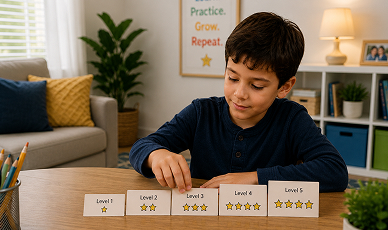
The pace, content, and sequence of every student's program is determined by their ongoing assessment data not a predetermined schedule. No two students move through the curriculum in exactly the same way or at the same speed.
Explicit & Direct
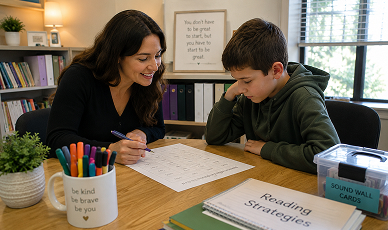
No reading skills are assumed to develop naturally through exposure. Every phoneme, grapheme, syllable type, and morphological element is taught directly and explicitly leaving nothing to chance or incidental learning.

Diagnostic & Responsive
Ongoing assessment drives every instructional decision. The specialist continually monitors what the student knows, what they are learning, and where confusion remains adjusting the program accordingly in real time.

- Inside a Session
What a Typical Orton-
Gillingham Lesson Looks Like
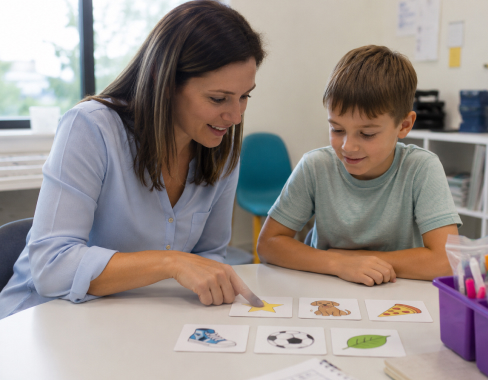
Every Orton-Gillingham lesson at Sensory Stepping Stones follows a structured format that warms up the brain for reading and writing, introduces and practices new content, and ends with the student reflecting on what they have learned. The lesson structure is consistent so that the student always knows what to expect which reduces anxiety and maximizes time on task.
Before instruction begins, Kristen Cox conducts formal and informal assessments to evaluate phonemic awareness, decoding, encoding, comprehension, and vocabulary skills. Based on these results, a personalized lesson plan is developed that targets the student’s specific areas of need.


STEP
01
Symbol to Sound warm up the brain for reading using flashcard review of previously taught sound-symbol correspondences
STEP
02
Alphabet writing in print or cursive warm up the hand for writing and reinforce letter formation at an automatic level
STEP
03
Sound to Symbol warm up the brain for spelling using dictation of previously learned sounds and their letter representations
STEP
04
Review Deck for Reading reading of previously taught words and sentences to reinforce fluency and automaticity
STEP
05
Review Deck for Spelling encoding of previously taught patterns through dictated words and sentences
STEP
06
Direct Instruction of New Rule explicit teaching of a new phoneme, grapheme, syllable type, or morphological pattern
STEP
07
Reading of New Rule immediate application of the new concept through reading words and sentences that follow the new pattern
STEP
08
Spelling of New Rule encoding practice using the new concept through dictation and written application
STEP
09
Oral Reading reading of connected text at the appropriate level to practice applying all learned skills in context
STEP
10
Student Reflection the student articulates what was learned in the session, reinforcing metacognitive awareness of their own progress
What Multisensory Techniques Look Like in Practice
- Tracing letters or words in sand, on a textured surface, or in the air while saying corresponding sounds aloud
- Tapping or clapping syllables to reinforce syllable division and phoneme segmentation
- Using letter tiles, magnetic letters, or manipulatives to build and break apart words
- Color-coding vowels and consonants in written words to reinforce phonological structure
- Visualizing words and their component parts to strengthen orthographic memory
- Simultaneous oral spelling saying each letter aloud while writing it
Ongoing Support & Communication
Kristen Cox provides ongoing support, encouragement, and feedback to students and communicates progress with parents and guardians regularly. She also collaborates with school-based special education teachers, reading specialists, and speech-language therapists when appropriate ensuring that private instruction and school-based services work together coherently rather than in parallel.
- Dyslexia
- Language-Based Reading Disabilities
- Weak Decoding Skills
- Phonological Processing Deficits
- Spelling Difficulties
- Reading Fluency Challenges
- Reading Comprehension Gaps
- Outcomes & Results
What Families Experience Through Orton-
Gillingham Reading Instruction
Students who receive consistent, appropriately paced Orton-Gillingham instruction consistently develop reading skills that begin to reflect their actual cognitive ability often for the first time. The changes extend beyond reading into confidence, school engagement, and self-concept.
Accurate, Automatic Word Recognition
Students develop the ability to decode unfamiliar words reliably freeing cognitive resources for comprehension rather than spending everything on sounding out individual words.
Stronger Reading Fluency
As decoding becomes less effortful, reading rate and prosody improve making the reading experience less exhausting and more meaningful for the student.
Rebuilt Reading Confidence
Students who have experienced repeated reading failure carry shame and avoidance as secondary consequences. As skills develop, the avoidance dissolves often transforming reluctant readers into willing ones.
Improved Spelling and Written Expression
As phoneme-grapheme relationships become automatic, spelling errors decrease and the student's written output begins to approach the sophistication of their spoken vocabulary and ideas.
Better Reading Comprehension
When decoding is automatic, the brain has capacity for understanding and retaining what is being read comprehension improves as a natural downstream consequence of fluency gains.
Stronger Academic Performance Across Subjects
Reading and writing underpin almost every academic subject. As literacy skills strengthen, academic performance across all content areas tends to follow even in subjects that feel unrelated to reading.
- Enrichment Programs
Summer Reading
Enrichment Groups
In addition to ongoing individual tutoring sessions, Sensory Stepping Stones offers summer reading enrichment groups led by Kristen Cox. These small-group programs use literature as a springboard for building comprehension, writing, vocabulary, and a genuine love of reading through hands-on activities and collaborative discussion rather than workbook exercises.

Summer Reading Enrichment Group Program
Our certified reading specialist leads small-group summer reading enrichment sessions that use engaging novels chosen specifically because even reluctant readers tend to find them compelling as the foundation for building comprehension, writing, and vocabulary development through hands-on crafts and interactive activities.
These groups are designed to foster a love of reading in students who may have come to see reading as a burden rather than a pleasure.
Space is limited each summer to keep groups small and instruction responsive. Registration opens in spring.
- About Our Reading Specialist
Kristen Cox Certified Orton-Gillingham Practitioner
Kristen Cox brings over two decades of specialized reading instruction to every student she works with. As an Associate Practitioner of the Orton-Gillingham Academy and a full-time special education teacher in the Wappingers Central School District, she combines deep classroom expertise with the individualized, high-intensity instruction that private multisensory reading sessions can provide.
Kristen has been creating and implementing multisensory reading lessons in both school and private settings since 2002. She works under the mentorship of a Fellow of the Academy of Orton-Gillingham the highest level of OG certification and has accumulated over 160 hours of professional development and practicum hours in pursuit of that designation herself.
She is passionate about the moment when a child who has struggled to read begins to experience themselves as a reader and she brings that passion to every session she delivers at Sensory Stepping Stones.
Ongoing Support & Communication
- Associate Practitioner Orton-Gillingham Academy
- Master's Degree in Literacy Mount Saint Mary College
- Bachelor of Arts in Psychology & Special Education Marist College
- Level 1 Certification & Group Instruction Wilson Reading Academy
- 20+ years multisensory reading instruction experience
- Full-time special education teacher, Wappingers Central School District
- 160+ hours professional development and practicum pursuing OG Fellowship
- Experience with dyslexia, language-based learning disabilities, and reading delays
- Parent stories
Real Families. Real Results.
You’re not the first family to walk in feeling hopeless. And you won’t be the last to walk out feeling seen.
We spent years trying different programs, but this was the first place where our son truly felt understood. The changes in his confidence, focus, and communication have been incredible for our whole family.
Emma & Daniel
Parents of Liam, age 7
Our daughter used to dread reading and schoolwork. Now she proudly reads bedtime stories to her little brother. The patience, warmth, and support here made all the difference.
Sophia & Michael
Parents of Ava, age 9
We spent years trying different programs, but this was the first place where our son truly felt understood. The changes in his confidence, focus, and communication have been incredible for our whole family.
Emma & Daniel
Parents of Liam, age 7
- Questions parents ask us
Honest answers to the things you're actually wondering.
Still have questions? We’d rather you ask than wonder.
- Take the first step
You don't need to have it figured out. You just need to start.
A free 30-minute conversation, no clipboards or scripts. Just us, you, and whatever you’re carrying.